
.jpg)
Often, it's not the answer to the problem that's most interesting, but the conversation along the way: who asks, who explains, and how students build on each other's ideas. A new Norwegian-developed model, the CCMR model, provides teachers with a tool to discover such patterns, and to strengthen students' collaboration so that everyone learns more.
A New Model for Understanding Collaboration
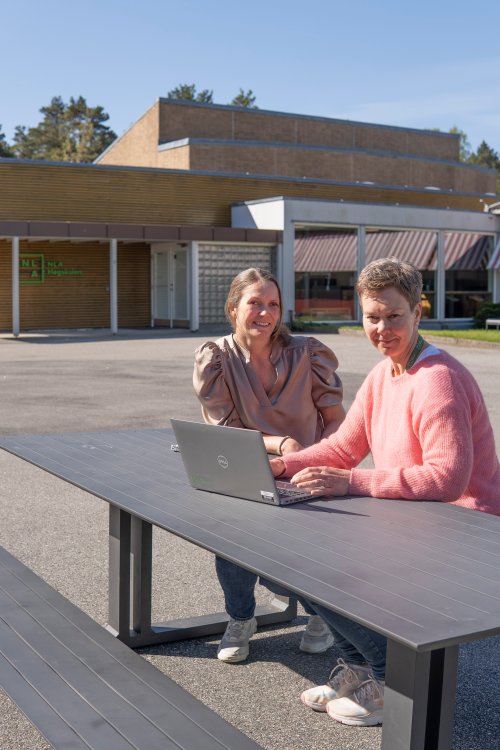
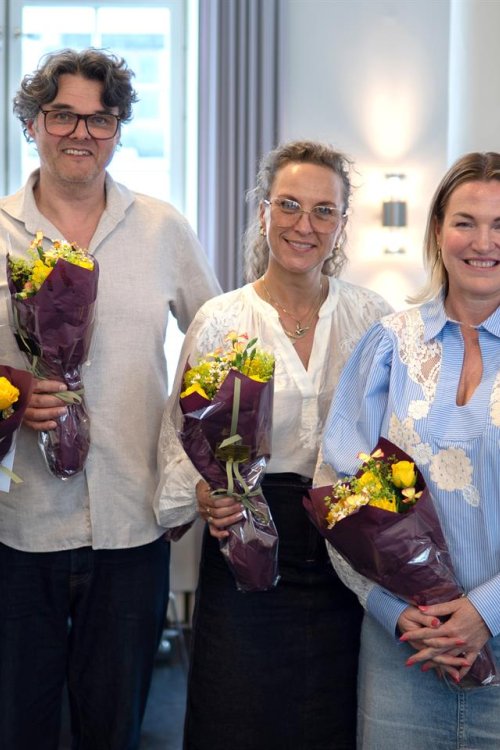
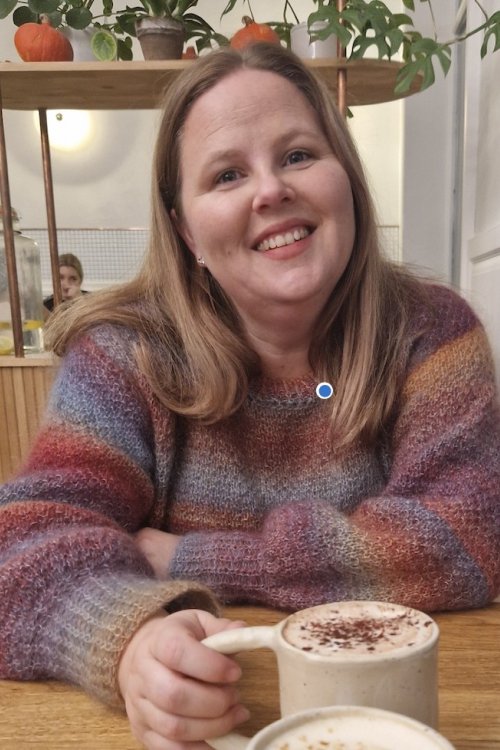
Researchers Ellen Kristine Solbrekke Hansen (NLA College) and Margrethe Naalsund (NMBU) have developed the CCMR model (Creative Collaborative Mathematical Reasoning). The model helps teachers see what happens in small groups of students when they solve tasks: how they reason, how they collaborate, and what roles they take in the conversation.
The point of the model is to give the teacher a language and a structure to interpret interaction, and thus be able to support the students in a more targeted way.
Three Things to Look For
The CCMR model highlights three important dimensions in the collaboration:
- Mathematical reasoning – how students explain and justify their solutions.
- Collaboration processes – how students build on each other's ideas, ask questions, and correct misunderstandings.
- Role distribution (room for maneuver) – who takes control? Do both get to contribute, or does one mostly become a spectator?
Two Typical Patterns
The researchers found that student collaboration can often be described with two main patterns. In two-way interactions, both participate actively, challenge, and explain. Such conversations provide the greatest learning and engagement. In one-way interactions, on the other hand, one student dominates, while the other follows. Then the learning outcome becomes more unevenly distributed, and does not give as much return for both.
.jpg)
Why Does This Matter?
The way students talk together determines how much they actually learn. When both get to contribute, they have to put their thoughts into words, explain and justify, ask questions and together figure out problems. This gives a deeper understanding of mathematics. If, on the other hand, the collaboration becomes one-sided, the most passive student loses the opportunity to train these skills.
Here, the CCMR model can give the teacher concrete glasses to see the classroom through. By discovering the patterns, the teacher can insert small but important measures – for example, encouraging the most dominant student to listen and ask questions, or giving the more withdrawn student room to formulate their own proposals.
This is not just about math. The ability to collaborate, ask good questions and build on others' ideas are skills that are important in working life and in society in general. When students get to practice this through solving math problems together, they take with them something that potentially lasts longer than knowledge of functions and graphs.
The Teacher's Toolbox: How to Use the CCMR Model in Practice
- Listen for balance. Ask yourself: Are both students active in the conversation or is it one who talks the most?
- Encourage role reversal. Ask the most talkative student to ask questions and the quieter student to explain an idea.
- Ask open questions. Can you explain this in another way, or what do you think about this?
- Make concepts visible. Help students use mathematical words in conversations, so that they put words to their reasoning.
- Focus on the process, not just the answer. When the students have solved a task, ask them to tell how they arrived at the solution – together.

.jpg)

.jpg)
.jpg)


.jpg)