

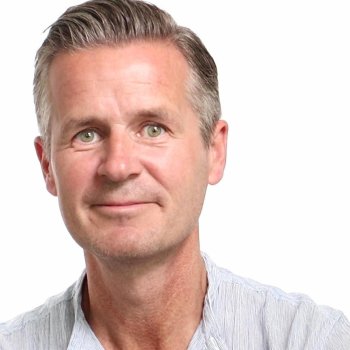
Kim Larsen
Associate Professor
NLA University College | Kalfaret, Bergen
Publications
Competence
* Theology and spirituality
* Ethics and ethical theory
* Religion and worldviews in education and society
* Secularisation and pluralism
* Digitalisation and artificial intelligence
* Philosophy of science and methodology
My work is situated at the intersection of theological tradition, formation, and contemporary cultural and technological challenges. Alongside research and teaching, I am engaged in public dissemination through opinion articles in national media and podcast conversations addressing theology, ethics, and societal issues for a wider audience.
* Ethics and ethical theory
* Religion and worldviews in education and society
* Secularisation and pluralism
* Digitalisation and artificial intelligence
* Philosophy of science and methodology
My work is situated at the intersection of theological tradition, formation, and contemporary cultural and technological challenges. Alongside research and teaching, I am engaged in public dissemination through opinion articles in national media and podcast conversations addressing theology, ethics, and societal issues for a wider audience.
Catholic Studies (CAS). Social Responsibility Rooted in Human Dignity and the Common Good
I am a member of the research group Catholic Studies (CAS), which explores how Catholic social thought may contribute to contemporary reflections on human dignity, solidarity, and social responsibility. The group integrates theological tradition with current societal challenges and seeks to strengthen public discourse on the common good in a pluralistic Europe.
I am a member of the research group Catholic Studies (CAS), which explores how Catholic social thought may contribute to contemporary reflections on human dignity, solidarity, and social responsibility. The group integrates theological tradition with current societal challenges and seeks to strengthen public discourse on the common good in a pluralistic Europe.
I hold a PhD in Theology. My dissertation examined the phenomenon of surrender in Christian spirituality through the writings of Wilfrid Stinissen, addressing what characterises surrender and how it manifested itself in processes of transformation within the life of faith. The project was situated at the intersection of spirituality, theological anthropology, and hermeneutics, analysing how religious experience was interpreted and understood as transformation, a process in which surrender appears as an inner movement in human life. The study also formed the basis for the book Transformation as Surrender.
I also hold a Master’s degree in Information Technology from Australia. This combination of theology and technology has shaped my academic work, particularly my interest in digitalisation, artificial intelligence, and the ways technological environments influence understandings of the human person, knowledge, and Bildung.
I also hold a Master’s degree in Information Technology from Australia. This combination of theology and technology has shaped my academic work, particularly my interest in digitalisation, artificial intelligence, and the ways technological environments influence understandings of the human person, knowledge, and Bildung.
I teach theology, religious education, Christianity, ethics, and philosophy of science. A central component of my teaching is Christian faith and tradition, both historically and systematically. At the same time, I work broadly with religions and worldviews and how they may be understood, compared, and taught in school and society.
The teaching addresses what religions and worldviews are, how they shape identity and practice, and their place in a pluralistic society. A particular focus is the educational mandate of religious education: how the subject can provide knowledge, judgement, and respect without becoming either confessional instruction or relativism.
Students engage both classical sources and contemporary issues, from the Church Fathers and the Reformation to secularisation and artificial intelligence. The aim is academic understanding and the ability to navigate a worldview-open society.
The teaching addresses what religions and worldviews are, how they shape identity and practice, and their place in a pluralistic society. A particular focus is the educational mandate of religious education: how the subject can provide knowledge, judgement, and respect without becoming either confessional instruction or relativism.
Students engage both classical sources and contemporary issues, from the Church Fathers and the Reformation to secularisation and artificial intelligence. The aim is academic understanding and the ability to navigate a worldview-open society.
My projects revolve around four main areas: ethics and anthropology, theology and spirituality, hermeneutics and tradition, and digitalisation and artificial intelligence in education and society.
I examine how classical ethical theories may be rearticulated in the context of modern pluralism, and how theological tradition can contribute constructively to public discussions on human dignity, moral responsibility, and the common good.
I also explore how AI can be used both creatively and critically in teaching and dissemination.
I examine how classical ethical theories may be rearticulated in the context of modern pluralism, and how theological tradition can contribute constructively to public discussions on human dignity, moral responsibility, and the common good.
I also explore how AI can be used both creatively and critically in teaching and dissemination.